Senior Care Workforce: Training Programs That Are Making a Difference
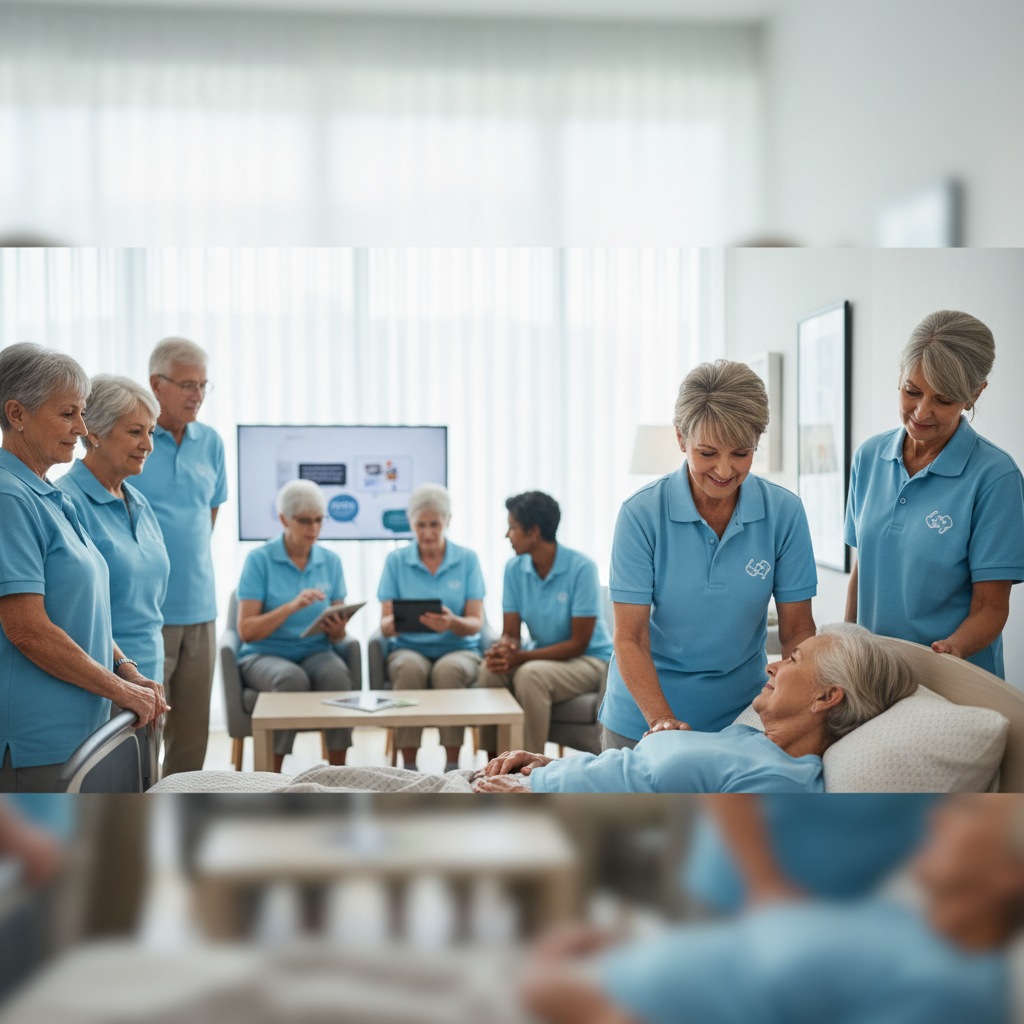
The senior care workforce is the backbone of elder care in America, yet training programs for caregivers have long been underfunded and undervalued. As the staffing crisis in long-term care deepens, innovative training programs are making a difference by improving caregiver skills, reducing turnover, and ultimately delivering better outcomes for the seniors they serve. This report examines the programs that are reshaping workforce development in the senior care industry.
The Current State of Caregiver Training
Federal requirements for certified nursing assistant (CNA) training are remarkably minimal. The current standard, established by the Omnibus Budget Reconciliation Act of 1987, requires just 75 hours of training, including 16 hours of clinical practice. This threshold has not been updated in nearly four decades, despite dramatic increases in the complexity of care that CNAs are expected to provide.
By comparison, cosmetologists in most states must complete 1,000 to 1,600 hours of training before obtaining a license. The disparity underscores a troubling truth about how society values the work of caring for its most vulnerable members. The National Academies of Sciences, Engineering, and Medicine has recommended increasing the federal minimum to at least 120 hours, with additional training in dementia care, infection control, and person-centered care practices.
Home health aides, who provide the majority of in-home senior care, face similarly minimal requirements — just 75 hours of training federally, though some states have set higher standards. The rapid growth of home-based care, driven by seniors' preference to age in place, makes upgrading these training standards increasingly urgent.
Programs Leading the Way
PHI's Coaching Approach to Dementia Care. PHI, a national organization focused on the direct care workforce, has developed the Coaching Approach, which trains frontline caregivers in person-centered dementia care through mentorship rather than traditional classroom instruction. Caregivers work alongside trained coaches who model best practices in real care situations. Facilities that have implemented the program report a 25 percent reduction in staff turnover and measurable improvements in resident behavioral outcomes.
The RISE Program (Rutgers). Rutgers University's RISE (Resilient, Informed, Skilled, and Empowered) program targets certified nursing assistants in skilled nursing facilities, providing a 40-hour curriculum focused on communication skills, stress management, and clinical decision-making. A peer-reviewed evaluation found that RISE graduates demonstrated significantly higher job satisfaction, improved resident interaction quality, and reduced intention to leave their positions.
CNA Career Ladder Initiatives. Several health systems have implemented career ladder programs that provide CNAs with paid educational pathways to become LPNs or RNs. Kaiser Permanente's program, for example, covers tuition for qualifying employees and provides scheduling accommodations for coursework. Participants receive wage increases at each educational milestone, creating tangible incentives for professional development.
The Pioneer Network's Culture Change Training. The Pioneer Network has been at the forefront of transforming nursing home culture from an institutional model to a person-directed one. Their training programs teach staff to view residents as individuals with unique preferences, histories, and goals rather than patients to be managed. Facilities that adopt this approach consistently report higher staff and resident satisfaction.
Technology-Enhanced Training
Virtual reality (VR) is emerging as a powerful training tool in senior care. Several programs now use VR simulations to give caregivers the experience of living with conditions like macular degeneration, hearing loss, or Parkinson's disease. By experiencing the world through the perspective of their residents, caregivers develop deeper empathy and understanding.
Embodied Labs, a VR training company, has created simulations that place learners in scenarios such as experiencing a fall, navigating a conversation with memory loss, or dealing with the sensory changes of aging. Health systems using these tools report improved caregiver empathy scores and reduced use of physical restraints.
Online learning platforms have also expanded access to continuing education for caregivers in rural and underserved areas. The Relias Learning platform, used by thousands of long-term care facilities, offers on-demand courses in clinical skills, safety protocols, and specialty topics like hospice care and behavioral health.
The Economic Case for Training Investment
Investing in workforce training is not just an ethical imperative — it makes financial sense. The cost of CNA turnover is estimated at $3,500 to $5,000 per employee by the American Health Care Association, and industry-wide annual turnover rates exceeding 50 percent mean that facilities spend millions on recruitment and onboarding for workers who leave within their first year.
Programs that reduce turnover by even 10 to 15 percent can generate significant savings while simultaneously improving care quality. The Health Resources and Services Administration (HRSA) has cited workforce development as one of the highest-return investments in long-term care, with every dollar spent on training yielding an estimated $3 to $5 in reduced turnover costs, lower injury rates, and improved quality metrics.
State-Level Policy Innovation
Several states are leading the way with policy innovations that elevate caregiver training. Washington State's Long-Term Care Worker Training Standards require 75 hours of initial training plus 12 hours of continuing education annually, well above the federal floor. Oregon's Home Care Commission has created a specialized training infrastructure that includes career pathway counseling and credential portability across employers.
California's Master Plan for Aging, released in 2021, includes workforce development as one of its five core goals, with specific benchmarks for increasing training access, improving compensation, and creating career advancement opportunities for direct care workers.
Frequently Asked Questions
How can families identify well-trained caregivers?
Ask about the caregiver's certifications, specialized training (especially in dementia care if relevant), years of experience, and continuing education. Agencies that invest in ongoing training typically produce better caregivers and should be transparent about their training standards.
Are there free training resources for family caregivers?
Yes, several organizations offer free caregiver training, including the Alzheimer's Association, the Family Caregiver Alliance, and the Caregiver Action Network. Many Area Agencies on Aging also provide local training programs at no cost.
What certifications should professional caregivers pursue?
Beyond the basic CNA certification, valuable specialty credentials include Certified Dementia Practitioner (CDP), Certified in Hospice and Palliative Care (CHPNA), and the National Association of Health Care Assistants' certification program, which recognizes advanced practice CNAs.
Conclusion
The quality of senior care is inseparable from the quality of the workforce that provides it. Training programs that invest in caregivers — developing their skills, supporting their well-being, and creating meaningful career pathways — are not just making a difference in workforce retention. They are fundamentally improving the lives of the seniors who depend on these dedicated professionals. As the aging population grows and care demands intensify, scaling these programs from isolated success stories to industry-wide standards will be one of the defining challenges and opportunities in senior care.
Written by
More Posts
We Tried It: Are You Allergic to the Flu Shot? Here's How to Tell
Flu shot allergic reactions affect roughly 1.3 per million doses, yet many seniors skip vaccination out of fear. Here's how to identify a true allergy...
We Tried It: Are You Allergic to the Flu Shot? Here's How to Tell
A true allergic reaction to the flu shot affects fewer than 1.3 per million doses. Learn how to distinguish normal side effects from genuine allergy s...
We Tried It: Are You Allergic to the Flu Shot? Here's How to Tell
A true allergy to the flu shot affects fewer than 1.3 per million doses, yet many older adults skip vaccination out of fear. Here's what the research...
Be the first to comment