Comparing Senior Care Models Around the World
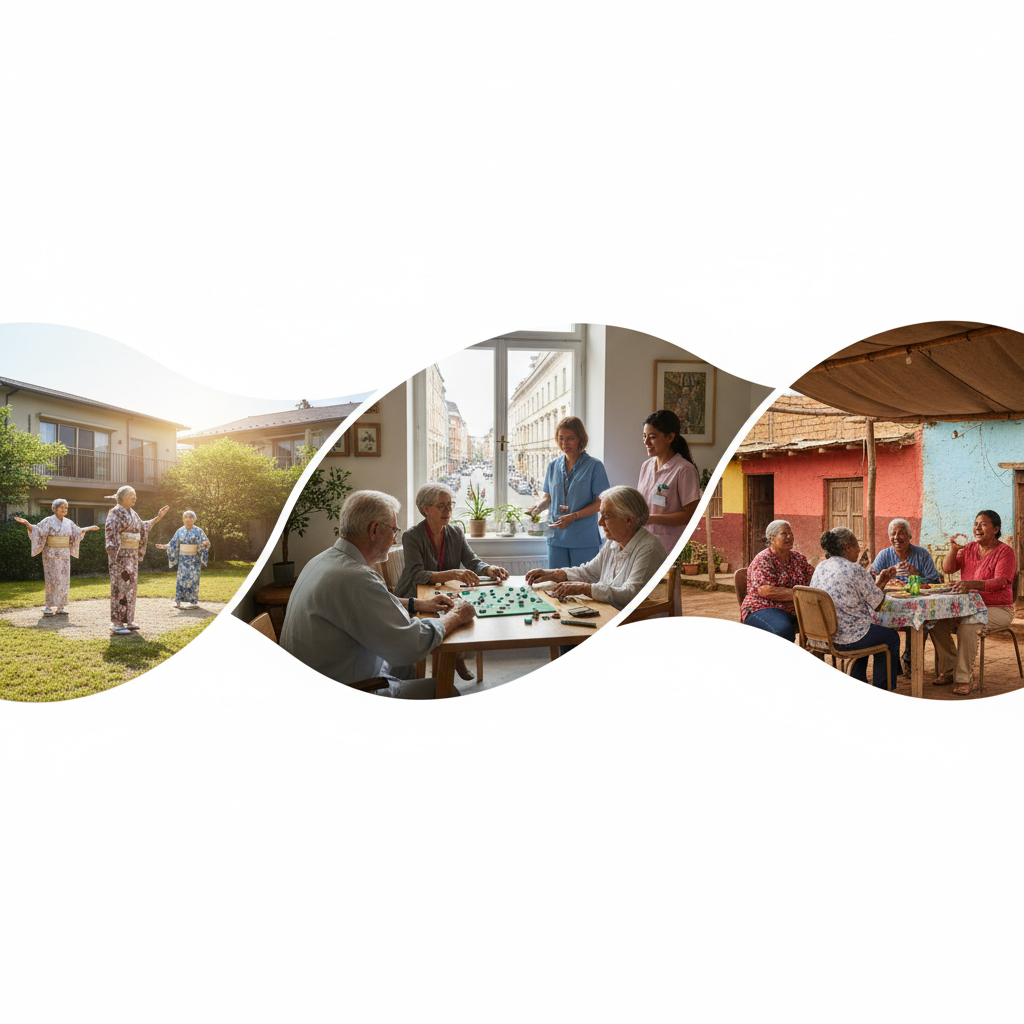
Senior care models around the world vary dramatically in philosophy, funding, and delivery — reflecting each nation's cultural values, economic capacity, and political priorities. As the global population aged 65 and older is projected to reach 1.6 billion by 2050, according to the United Nations, understanding how different countries approach elder care offers invaluable lessons. From universal insurance programs in East Asia to community-based models in Scandinavia, the international landscape of senior care reveals both cautionary tales and inspiring innovations.
Japan: Universal Long-Term Care Insurance
Japan, with the world's oldest population (29.3 percent of its citizens are aged 65 or older), has been a global pioneer in elder care policy. In 2000, Japan introduced its Long-Term Care Insurance (LTCI) system, a mandatory social insurance program funded through premiums paid by all citizens aged 40 and older, supplemented by government subsidies and copayments.
Key features of Japan's system include:
- Needs-based assessment: All citizens aged 65 and older can apply for a care needs assessment, which determines their eligibility level (from support level 1 to care level 5) and the corresponding service budget.
- Emphasis on home and community care: The system prioritizes keeping individuals in their homes as long as possible, offering a comprehensive menu of services including home help, adult day care, short-term institutional stays, and home modifications.
- Integration of preventive services: Japan has progressively expanded its focus on prevention, including community-based exercise programs and social participation initiatives known as "salon" activities.
Despite its comprehensiveness, Japan's LTCI system faces significant challenges. The system's costs have tripled since its inception, prompting periodic benefit reductions and copayment increases. Workforce shortages are acute — the Japanese government estimates a shortfall of 690,000 care workers by 2040. In response, Japan has turned to technology, deploying robotic lifting devices, monitoring sensors, and communication aids in care facilities across the country. Japan has also begun accepting care workers from Southeast Asian countries through bilateral agreements, though cultural and language barriers remain obstacles.
Denmark: Reablement and Aging in Place
Denmark is widely regarded as having one of the world's most progressive elder care systems, built on the principle that public services should enable older adults to live independently in their own homes for as long as possible. The Danish approach is characterized by universality — all citizens are entitled to publicly funded care services based on need, regardless of income.
Denmark's most influential contribution to global elder care is its reablement model, known in Danish as "hverdagsrehabilitering." Rather than providing ongoing assistance with daily tasks, reablement programs focus on restoring an individual's ability to perform those tasks independently. When a Danish citizen applies for home care services, they first undergo a time-limited rehabilitation program (typically 8 to 12 weeks) before ongoing services are considered.
The results have been impressive. Research from Fredericia Municipality, where the reablement model was pioneered, found that 45 percent of participants no longer needed home care services after completing the program. A national evaluation published in the European Journal of Ageing confirmed that reablement reduced long-term home care costs by 20 percent while improving self-reported quality of life among participants.
Denmark has also led the way in eliminating institutional care. Since 1987, the country has not built any new traditional nursing homes, instead investing in "care homes" — purpose-built apartments with on-site support staff and shared community spaces. Residents maintain their own homes and receive services as needed, preserving autonomy and dignity.
The Netherlands: The Buurtzorg Model
The Netherlands has gained international attention through Buurtzorg, an innovative home care organization founded in 2006 by Jos de Blok. Buurtzorg operates through self-managed teams of 10 to 12 nurses who provide holistic care to a defined neighborhood. Each team manages its own scheduling, care planning, and administration, with minimal bureaucratic overhead.
The model has produced remarkable outcomes. A study by Ernst & Young found that Buurtzorg clients required 40 percent fewer hours of care on average compared to clients of other Dutch home care organizations, while reporting higher satisfaction. The model achieves this by emphasizing the nurse-patient relationship, promoting self-sufficiency, and mobilizing informal support networks within the community.
Buurtzorg has expanded to 26 countries and has inspired similar initiatives worldwide. The model challenges the conventional assumption that efficiency in healthcare requires top-down management, standardized protocols, and large organizational structures. Instead, it demonstrates that empowering frontline professionals to make decisions can simultaneously improve quality and reduce costs.
Germany: Social Long-Term Care Insurance
Germany introduced its Pflegeversicherung (Long-Term Care Insurance) in 1995, making it the first European country to establish a universal long-term care program. The system is funded through mandatory contributions split equally between employers and employees, currently set at 3.4 percent of gross wages.
A distinctive feature of the German system is its emphasis on cash benefits. Beneficiaries can choose between receiving professional care services (Sachleistungen) or a cash payment (Pflegegeld) that they can use to compensate family members or informal caregivers. Approximately 52 percent of beneficiaries choose the cash benefit, reflecting the strong cultural preference for family-based care in Germany.
In 2017, Germany reformed its assessment system, replacing a narrow focus on physical limitations with a broader evaluation of independence across six domains, including cognitive and communicative abilities, behavioral challenges, and social participation. This reform significantly expanded eligibility for individuals with dementia and mental health conditions.
Singapore: The Medisave and ElderShield Approach
Singapore takes a distinctly different approach, emphasizing individual financial responsibility within a framework of government support. The country's elder care financing relies on three pillars: personal savings through the Medisave health savings account, CareShield Life (an enhanced version of the former ElderShield program providing long-term care insurance), and government subsidies that are means-tested.
Singapore's system reflects its broader philosophy of shared responsibility between individuals, families, and the state. The Maintenance of Parents Act, enacted in 1995, legally requires adult children to support their parents financially — a provision that codifies the cultural norm of filial piety. Government subsidies for elder care services are structured progressively, with lower-income families receiving greater support.
The city-state has also invested heavily in community-based care infrastructure. Its Community Care Apartments, launched in 2021, integrate housing with health monitoring and care services, targeting seniors who want to live independently but benefit from built-in support.
Lessons for the United States and Beyond
Comparing these models reveals several consistent themes that transcend national boundaries:
- Prevention and reablement yield better outcomes than reactive care: Denmark's reablement model and Japan's preventive programs demonstrate that investing in maintaining function is more effective and cost-efficient than managing decline.
- Home and community-based care is preferable to institutionalization: Every high-performing system prioritizes keeping people in their homes, with institutional care as a last resort.
- Workforce investment is non-negotiable: No country has solved the elder care workforce challenge, but those that offer better wages, training, and career pathways see better outcomes.
- Universal coverage improves equity: Systems with universal access to long-term care services show fewer disparities in care quality based on income or geography.
- Cultural context matters: There is no single "best" model — effective systems align with the cultural values and social structures of their populations.
The United States, which remains one of the only developed nations without a universal long-term care program, has much to learn from international examples. While the American context presents unique challenges — including a fragmented healthcare system, vast geographic diversity, and political resistance to new social insurance programs — the global evidence is clear. Countries that invest proactively in senior care, empower frontline workers, and prioritize aging in place consistently achieve better outcomes at lower per-capita cost. As America's senior population grows, these lessons become not just interesting but essential.
Written by
More Posts
We Tried It: Are You Allergic to the Flu Shot? Here's How to Tell
Flu shot allergic reactions affect roughly 1.3 per million doses, yet many seniors skip vaccination out of fear. Here's how to identify a true allergy...
We Tried It: Are You Allergic to the Flu Shot? Here's How to Tell
A true allergic reaction to the flu shot affects fewer than 1.3 per million doses. Learn how to distinguish normal side effects from genuine allergy s...
We Tried It: Are You Allergic to the Flu Shot? Here's How to Tell
A true allergy to the flu shot affects fewer than 1.3 per million doses, yet many older adults skip vaccination out of fear. Here's what the research...
Be the first to comment