How Artificial Intelligence Is Detecting Falls Before They Happen
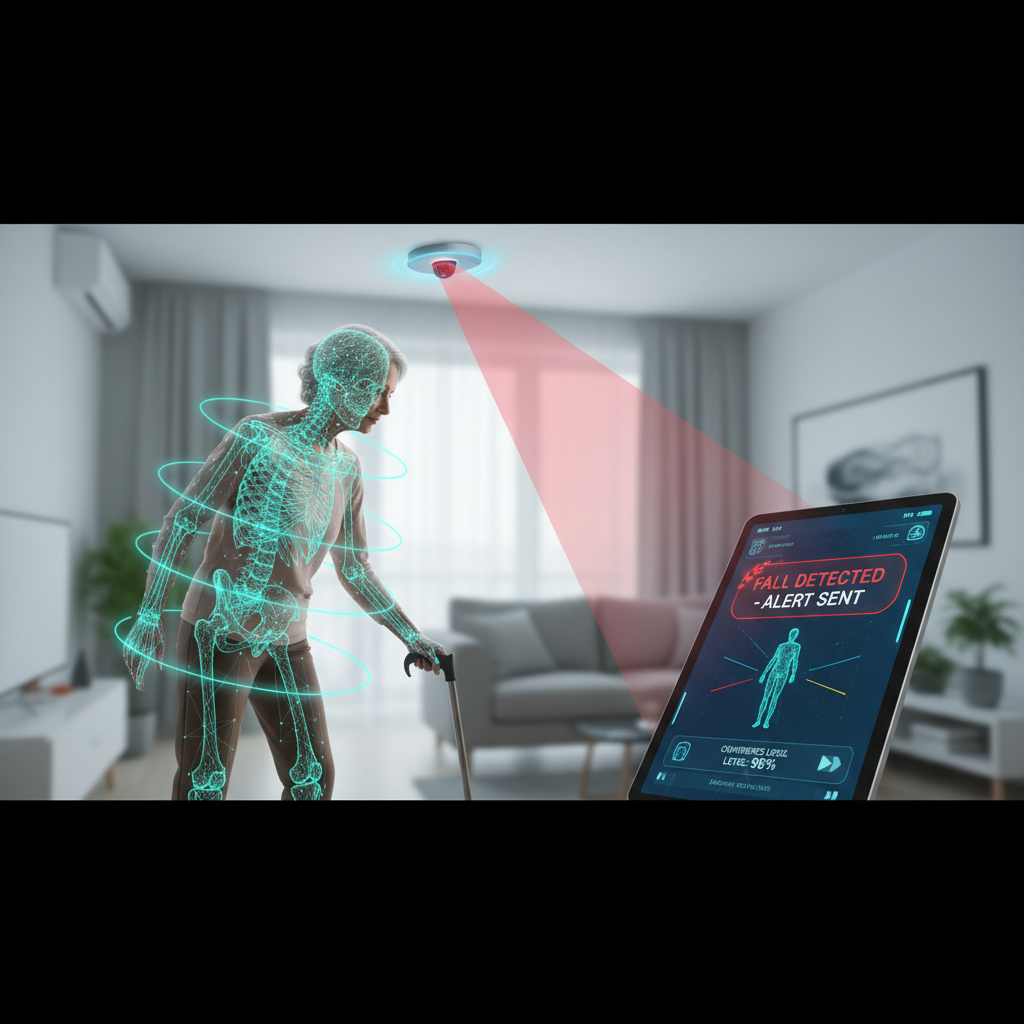
Artificial intelligence is detecting falls before they happen, shifting senior safety from reactive response to proactive prevention. Falls are the leading cause of injury-related death among adults 65 and older, claiming more than 36,000 lives annually in the United States alone. Now, AI-powered systems are analyzing gait patterns, environmental risks, and biometric data to predict fall risk hours or even days in advance — a capability that could fundamentally change how we protect aging populations.
The Fall Prevention Gap
Traditional fall prevention has relied on reactive measures: installing grab bars after a fall occurs, prescribing physical therapy after an injury, or moving a senior to a higher level of care after repeated incidents. While these interventions are valuable, they come after the damage has been done. The CDC estimates that one in four adults over 65 falls each year, and one in five of those falls results in a serious injury such as a hip fracture or traumatic brain injury.
The economic burden is equally staggering. Fall-related medical costs exceeded $50 billion in 2024, according to the National Council on Aging. Beyond the financial impact, falls often trigger a cascade of consequences — hospitalization, surgery, reduced mobility, loss of independence, and accelerated cognitive decline — that permanently alter a senior's quality of life.
The fundamental problem with reactive fall prevention is timing. By the time a fall occurs, the underlying risk factors have often been building for weeks or months. AI fall detection systems aim to identify these risk factors in real time, providing actionable warnings before a fall happens.
How AI Predicts Falls
Modern AI fall prediction systems use multiple data streams to build a comprehensive risk profile for each individual. The technology works through several complementary approaches.
Gait analysis. Changes in walking patterns are among the strongest predictors of fall risk. AI systems equipped with motion sensors or camera-based tracking can detect subtle changes in stride length, walking speed, balance symmetry, and foot clearance that are imperceptible to the human eye. Research published in the journal Sensors found that AI-analyzed gait data can predict fall risk with up to 88 percent accuracy — significantly better than standard clinical assessments.
Environmental monitoring. Smart home sensors can map a senior's movement patterns throughout their living space, identifying high-risk zones such as poorly lit hallways, cluttered pathways, or slippery surfaces. When combined with individual gait data, the AI can generate personalized risk maps that highlight the specific locations and times when a particular individual is most likely to fall.
Biometric tracking. Wearable devices that monitor heart rate, blood pressure, blood oxygen, and sleep patterns provide additional data points for fall risk prediction. Sudden drops in blood pressure (orthostatic hypotension), disrupted sleep patterns, and reduced physical activity levels are all established fall risk factors that AI systems can monitor continuously.
Medication interaction analysis. AI systems can cross-reference a senior's medication list with known fall-risk drug interactions, alerting caregivers when a new prescription or dosage change increases the probability of a fall. Polypharmacy — the use of five or more medications simultaneously — is a major fall risk factor that affects approximately 40 percent of seniors.
Current Systems and Deployments
Several AI fall prediction systems have moved beyond research labs into real-world deployment. CarePredict, a leading platform, uses wrist-worn sensors to continuously monitor activity patterns, eating habits, walking speed, and sleep in assisted living facilities. The system generates risk alerts when it detects deviations from an individual's baseline patterns, allowing staff to intervene proactively.
VirtuSense Technologies has deployed its VSTBalance system in more than 200 senior living communities, using a brief standing assessment to generate AI-driven fall risk scores. The system has reported a 73 percent reduction in falls at participating facilities — a dramatic improvement over traditional prevention methods.
In the home care setting, companies like Vayyar and Cherry Home are offering radar-based room sensors that detect falls without cameras, addressing privacy concerns that have slowed adoption of vision-based systems. These sensors can distinguish between a fall and normal activities like sitting down, reducing false alarms that undermine user trust.
Clinical Validation and Evidence
The scientific evidence for AI fall prediction is growing rapidly. A 2025 meta-analysis in the Journal of the American Geriatrics Society reviewed 34 studies evaluating AI-based fall prediction systems and found a pooled sensitivity of 82 percent and specificity of 79 percent — meaning these systems correctly identify most at-risk individuals while maintaining an acceptable false-positive rate.
However, researchers caution that performance varies significantly based on the population studied, the sensors used, and the prediction timeframe. Short-term predictions (24 to 48 hours) tend to be more accurate than long-term projections, and systems trained on diverse populations perform better than those developed with limited demographic representation.
Privacy and Ethical Considerations
The deployment of AI monitoring systems in senior living environments raises important ethical questions. Continuous monitoring, while potentially life-saving, can feel invasive to residents who value their privacy and autonomy. Camera-based systems have faced particular resistance, even when they do not record identifiable images.
Best practices in the field emphasize informed consent, data minimization (collecting only what is necessary for prediction), transparent data handling policies, and the ability for residents or their families to opt out. The tension between safety and privacy will require ongoing dialogue as these systems become more prevalent.
The Future of AI Fall Prevention
The next generation of AI fall prediction systems will likely integrate multiple sensor types — wearables, room sensors, and smart home devices — into unified platforms that provide a complete picture of an individual's risk profile. Advances in edge computing will allow data processing to occur locally, reducing privacy risks associated with cloud-based systems.
Researchers are also exploring the use of AI to guide personalized fall prevention interventions, such as exercise programs tailored to an individual's specific balance deficits or environmental modifications targeted to their highest-risk areas. This shift from generic prevention to personalized risk management represents the next frontier in senior safety.
Frequently Asked Questions
Can AI fall detection systems work in a private home?
Yes, several systems are designed specifically for home use, including radar-based room sensors that do not require cameras. These systems can alert caregivers or family members when a fall occurs or when risk factors increase.
Do AI fall prediction systems replace medical alert devices?
No, they complement them. Medical alert devices respond after a fall occurs, while AI prediction systems aim to prevent falls. Using both provides the most comprehensive safety coverage.
How accurate are these systems compared to a doctor's assessment?
Studies suggest that AI systems can match or exceed the predictive accuracy of standard clinical fall risk assessments, particularly for short-term prediction. However, they are most effective when used alongside clinical judgment, not as a replacement for it.
Conclusion
AI-powered fall prediction represents one of the most promising developments in senior safety in decades. By shifting the paradigm from reactive response to proactive prevention, these systems have the potential to save thousands of lives and prevent millions of injuries each year. While challenges around accuracy, privacy, and adoption remain, the trajectory is clear: the future of fall prevention is predictive, personalized, and powered by artificial intelligence.
Written by
More Posts
We Tried It: Are You Allergic to the Flu Shot? Here's How to Tell
Flu shot allergic reactions affect roughly 1.3 per million doses, yet many seniors skip vaccination out of fear. Here's how to identify a true allergy...
We Tried It: Are You Allergic to the Flu Shot? Here's How to Tell
A true allergic reaction to the flu shot affects fewer than 1.3 per million doses. Learn how to distinguish normal side effects from genuine allergy s...
We Tried It: Are You Allergic to the Flu Shot? Here's How to Tell
A true allergy to the flu shot affects fewer than 1.3 per million doses, yet many older adults skip vaccination out of fear. Here's what the research...
Be the first to comment