How AI Is Transforming Elder Care: Trends and Technologies
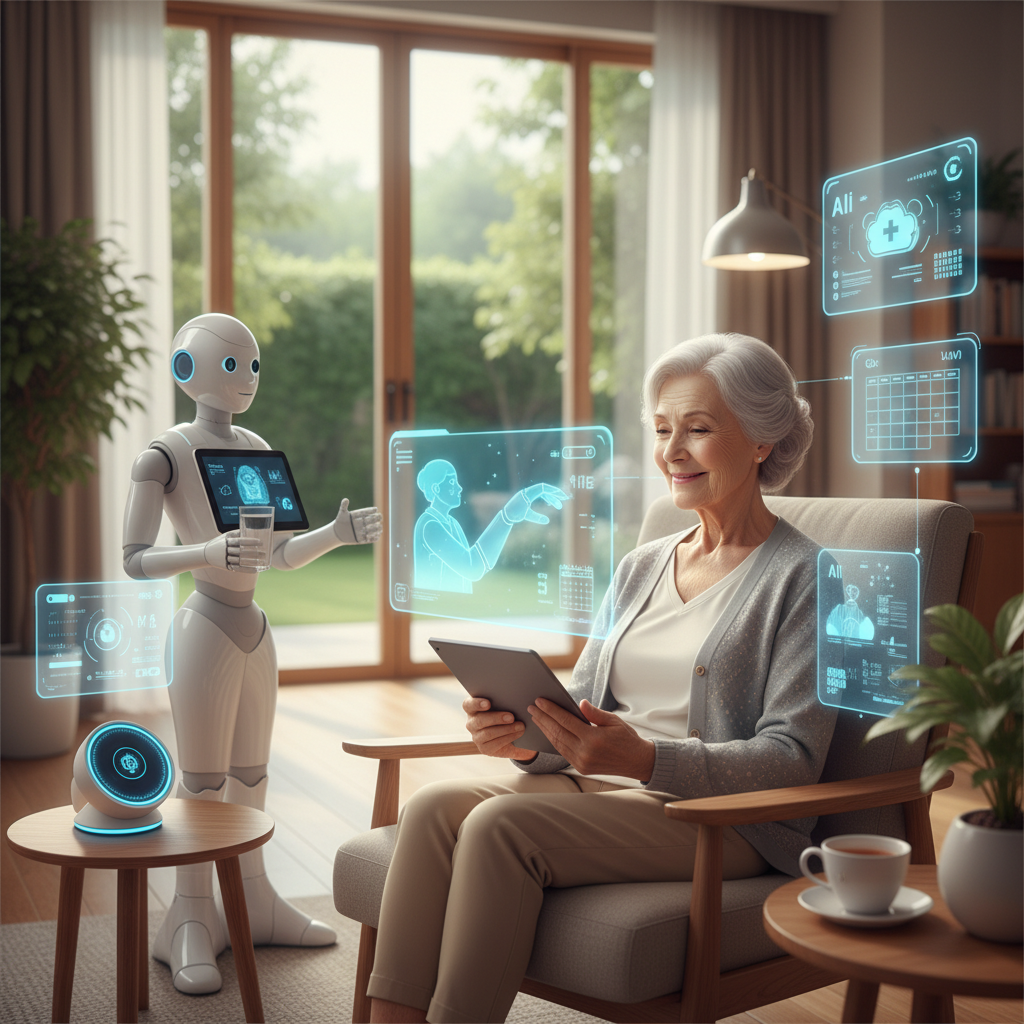
Artificial intelligence in elder care is no longer a futuristic concept — it is a rapidly growing reality that is changing how seniors receive support, how caregivers deliver services, and how healthcare systems manage aging populations. From AI-powered diagnostic tools to social robots that combat loneliness, the integration of artificial intelligence into senior care represents one of the most significant shifts the industry has seen in decades.
AI-Powered Remote Monitoring and Fall Detection
One of the most impactful applications of AI in elder care is remote patient monitoring. Wearable devices and sensor systems now use machine learning algorithms to detect changes in gait, activity levels, and vital signs that may indicate a fall risk or declining health. A 2025 study published in The Lancet Digital Health found that AI-driven fall prediction systems reduced fall-related hospitalizations by 26 percent in participating facilities.
Companies such as CarePredict and Vayyar have developed ambient monitoring systems that do not require wearable devices at all. These systems use radar-based sensors and AI to track movement patterns within the home, alerting caregivers to anomalies without compromising privacy. The Centers for Disease Control and Prevention (CDC) reports that falls are the leading cause of injury-related death among adults aged 65 and older, making this technology potentially lifesaving.
Smart home integrations are expanding these capabilities further. Voice-activated assistants calibrated for senior users can remind patients to take medications, schedule appointments, and even detect vocal biomarkers that may indicate depression or cognitive decline.
Predictive Analytics for Chronic Disease Management
Chronic diseases such as diabetes, heart failure, and chronic obstructive pulmonary disease (COPD) disproportionately affect older adults. AI-powered predictive analytics are helping clinicians identify at-risk patients earlier and intervene before conditions escalate. Key developments include:
- Hospital readmission prediction: Machine learning models analyzing electronic health records can now predict 30-day readmission risk with over 85 percent accuracy, according to research from Johns Hopkins University.
- Medication interaction analysis: AI systems review complex medication regimens common among seniors to flag potentially dangerous interactions that human pharmacists might miss.
- Cognitive decline detection: Natural language processing tools can analyze speech patterns during routine telehealth visits to detect early signs of Alzheimer's disease and other dementias.
- Personalized care plans: AI algorithms generate individualized care recommendations based on a patient's complete medical history, lifestyle factors, and genetic predispositions.
The Mayo Clinic's AI-driven early warning system for heart failure, deployed across its network in 2025, has been credited with a 19 percent reduction in emergency department visits among enrolled patients over age 70.
Social Robots and Companionship Technology
Social isolation is a well-documented health risk for older adults, associated with increased rates of depression, cognitive decline, and mortality. AI-powered social robots are emerging as a novel intervention. Japan's PARO robotic seal, one of the earliest therapeutic robots, has been joined by more sophisticated companions such as ElliQ by Intuition Robotics and Moxie-based platforms adapted for senior users.
A 2025 randomized controlled trial published in JAMA Internal Medicine found that seniors who interacted with AI companion robots for at least 30 minutes daily reported a 33 percent reduction in self-reported loneliness scores over a six-month period. The study also noted improvements in medication adherence and physical activity levels among participants.
These robots do not replace human connection, but they fill critical gaps — particularly for seniors living alone or in facilities with limited social programming. As Dr. Murali Doraiswamy, a professor of psychiatry at Duke University, has noted, "AI companions can serve as a bridge, maintaining cognitive engagement and emotional well-being between human visits."
AI in Memory Care and Dementia Support
For the estimated 6.9 million Americans living with Alzheimer's disease, AI offers especially promising applications. Digital platforms now use AI to deliver personalized cognitive stimulation exercises, adapting in real time to the user's abilities and preferences. Music therapy applications powered by AI create playlists based on a patient's personal history and emotional responses, with research from the University of Toronto showing measurable reductions in agitation and anxiety.
Caregivers of dementia patients are also benefiting from AI tools. Virtual assistants designed specifically for family caregivers can answer questions about disease progression, suggest communication strategies, and connect users with local resources. The Alzheimer's Association has partnered with several technology companies to develop AI chatbots that provide 24/7 support for the estimated 11.5 million unpaid dementia caregivers in the United States.
Ethical Considerations and Privacy Concerns
The rapid adoption of AI in elder care raises important ethical questions. Privacy is a primary concern, particularly when monitoring systems collect continuous data about a person's movements, health metrics, and daily routines. The American Geriatrics Society has called for clear standards around informed consent, data ownership, and algorithmic transparency.
There are also concerns about equity of access. AI-powered care technologies tend to be more available in urban, affluent settings, potentially widening existing disparities in senior care. A 2025 report from the Brookings Institution found that only 22 percent of rural nursing homes had adopted any form of AI-assisted technology, compared to 61 percent of urban facilities.
Bias in AI algorithms is another critical issue. If training data underrepresents certain populations — such as racial minorities or individuals with atypical health profiles — the resulting models may produce less accurate predictions for these groups.
The Road Ahead for AI in Senior Care
Industry analysts predict that AI in the global elder care market will exceed $12 billion by 2028, driven by demographic pressures and continued technological advancement. However, successful implementation requires more than technology alone. Training caregivers to work alongside AI systems, establishing robust regulatory frameworks, and ensuring that the human element of care is preserved will be essential.
AI is transforming elder care in profound and measurable ways — improving safety, enhancing quality of life, and empowering both seniors and caregivers with better information. The key challenge going forward will be ensuring that these innovations reach everyone who needs them, not just those who can afford them.
Written by
More Posts
We Tried It: Are You Allergic to the Flu Shot? Here's How to Tell
Flu shot allergic reactions affect roughly 1.3 per million doses, yet many seniors skip vaccination out of fear. Here's how to identify a true allergy...
We Tried It: Are You Allergic to the Flu Shot? Here's How to Tell
A true allergic reaction to the flu shot affects fewer than 1.3 per million doses. Learn how to distinguish normal side effects from genuine allergy s...
We Tried It: Are You Allergic to the Flu Shot? Here's How to Tell
A true allergy to the flu shot affects fewer than 1.3 per million doses, yet many older adults skip vaccination out of fear. Here's what the research...
Be the first to comment