The Rise of Virtual Reality Therapy for Seniors with Dementia
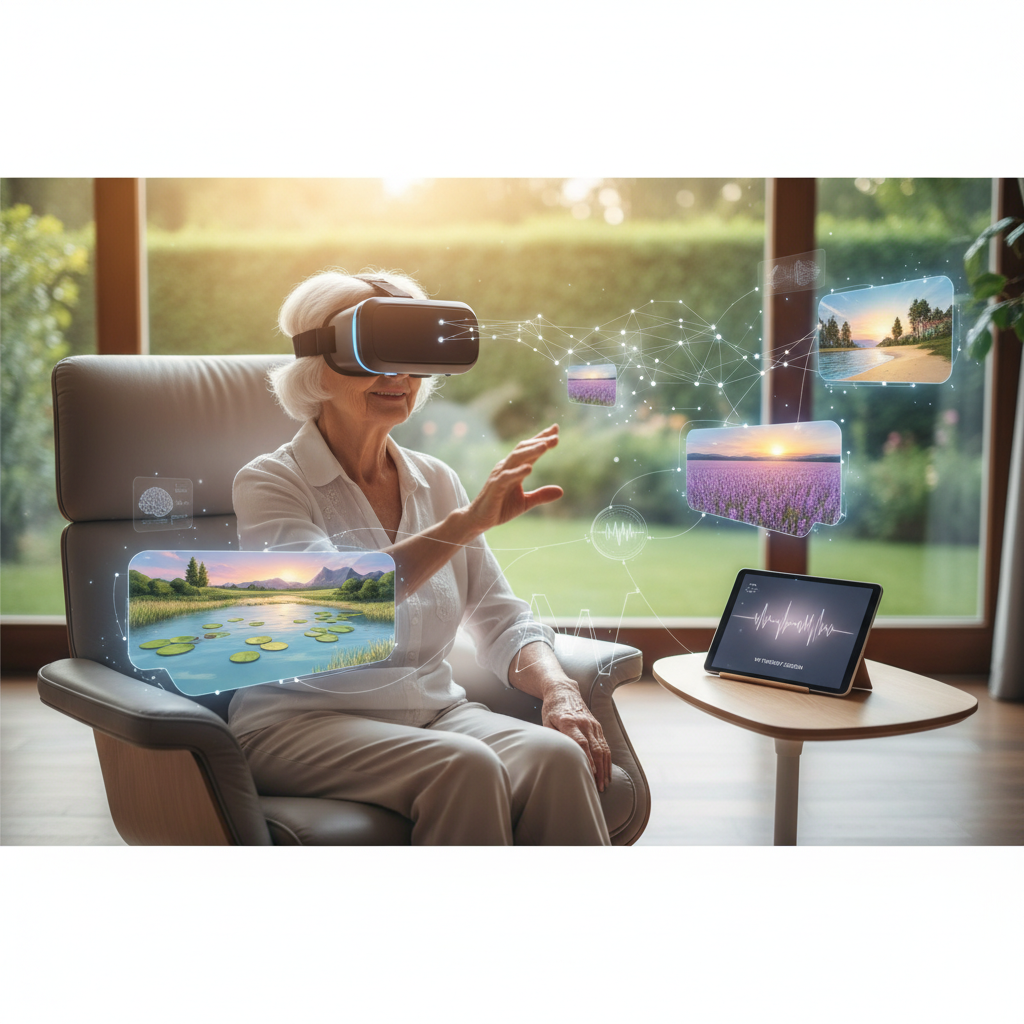
Virtual reality therapy for seniors with dementia is emerging as one of the most promising non-pharmacological interventions in memory care. As the limitations of drug-based treatments become increasingly apparent — with recent medications offering only modest cognitive benefits alongside significant side effects — VR therapy offers a different approach: using immersive digital experiences to reduce agitation, improve mood, and reconnect patients with meaningful memories and environments.
How VR Therapy Works in Dementia Care
Virtual reality therapy for dementia uses head-mounted displays or projection-based systems to immerse patients in calming, familiar, or stimulating environments. Unlike the high-intensity VR gaming experiences designed for younger users, dementia-focused VR is specifically designed to be gentle, non-overwhelming, and therapeutically targeted.
Common VR experiences include virtual visits to familiar locations from a patient's past (their childhood neighborhood, a favorite vacation spot, their wedding venue), nature immersions (beaches, forests, gardens), music-paired visual experiences, and interactive activities like virtual fishing, painting, or cooking. The content is curated to avoid sudden movements, loud noises, and complex navigation that could cause distress in cognitively impaired users.
The therapeutic mechanism is believed to work through multiple pathways. Familiar environments and experiences can trigger preserved long-term memories, providing cognitive stimulation without the frustration of tasks that depend on impaired short-term memory. The immersive nature of VR engages multiple senses simultaneously, creating a more powerful therapeutic stimulus than traditional activities. And the novelty of the technology itself can spark curiosity and engagement in patients who have become withdrawn from conventional programming.
Clinical Evidence
Research on VR therapy for dementia has grown rapidly in recent years, and the results are encouraging. A 2024 systematic review in the journal Aging and Mental Health analyzed 28 studies involving VR interventions for people with dementia and found significant improvements in several key outcomes.
Agitation and behavioral disturbance — among the most challenging symptoms for caregivers to manage — showed the most consistent improvement. Multiple studies reported 30 to 50 percent reductions in agitation scores during and after VR sessions. A randomized controlled trial at the University of Kent found that VR nature experiences reduced agitation by 40 percent compared to a control group watching nature videos on a standard screen.
Mood and emotional well-being also improved significantly. Patients consistently reported feeling happier, calmer, and more engaged after VR sessions. Staff observations confirmed these self-reports, noting increased smiling, verbal communication, and social interaction following VR use.
Cognitive stimulation effects are more variable. Some studies show short-term improvements in attention and verbal fluency following VR sessions, while others find no significant cognitive impact. Researchers note that VR therapy should be viewed primarily as a quality-of-life intervention rather than a cognitive remediation tool.
Leading Programs and Products
Rendever. Based in Boston, Rendever has become the leading VR platform for senior living communities, deployed in more than 450 facilities across North America. Their platform includes group VR experiences (multiple residents can share the same virtual environment simultaneously), personalized reminiscence therapy using Google Street View to virtually visit patients' hometowns, and adventure experiences like hot air balloon rides and ocean explorations.
Rendever's research, conducted in partnership with MIT and published in peer-reviewed journals, has demonstrated reduced loneliness, improved mood, and increased social engagement among users. The company's group viewing feature is particularly innovative, as it transforms VR from a solitary to a communal experience.
MyndVR. This Dallas-based company focuses on therapeutic VR content developed specifically for cognitive care. Their library includes over 100 experiences designed by healthcare professionals, ranging from guided meditations to interactive music therapy sessions. MyndVR has partnered with the Department of Veterans Affairs to provide VR therapy to veterans in VA nursing homes and community living centers.
Embodied Labs. While primarily focused on caregiver training, Embodied Labs has developed "We Are Alfred," a VR experience that places users in the perspective of a person with macular degeneration and hearing loss. This empathy-building tool helps caregivers understand the sensory experiences of the seniors they serve, leading to more compassionate and appropriate care.
Implementation Challenges
Despite its promise, VR therapy in dementia care faces several practical barriers to widespread adoption. Cost remains significant, with enterprise VR systems running $5,000 to $15,000 per facility plus ongoing content licensing fees. Staff training is essential but time-consuming, and high turnover in long-term care means continuous retraining investment.
Not all dementia patients are candidates for VR therapy. Those with severe visual impairment, vestibular disorders, or claustrophobia may not tolerate headset-based systems. Patients in the latest stages of dementia may not be able to engage meaningfully with the content. Careful individual assessment is required to identify appropriate candidates.
Hygiene management — particularly sanitizing shared headsets between users — requires rigorous protocols. The COVID-19 pandemic heightened awareness of infection control in shared devices, and facilities must demonstrate robust cleaning procedures.
The Future of VR in Dementia Care
The trajectory of VR therapy in dementia care points toward increasingly personalized, accessible, and evidence-based applications. Advances in AI will enable automated content personalization based on individual patient histories, preferences, and real-time biometric responses. Lighter, more comfortable headsets will improve tolerability for extended sessions.
Integration with other sensor-based monitoring systems may allow VR sessions to be triggered automatically when agitation is detected, providing a preemptive calming intervention. Research into haptic feedback — adding touch sensations to virtual experiences — could further enhance immersion and therapeutic impact.
As hardware costs continue to decline and the evidence base grows, VR therapy is likely to transition from an innovative add-on to a standard component of dementia care programming. The Centers for Medicare and Medicaid Services has begun exploring reimbursement pathways for technology-based therapeutic interventions, which could dramatically accelerate adoption.
Frequently Asked Questions
Is VR therapy safe for people with dementia?
When properly implemented with appropriate content, VR therapy has been shown to be safe for most people with mild to moderate dementia. Sessions should be supervised, kept to 10 to 20 minutes initially, and discontinued if the patient shows signs of distress. Medical clearance is recommended for patients with epilepsy, severe visual impairment, or vestibular disorders.
Can family members create VR content for their loved ones?
Some platforms, including Rendever, allow families to contribute 360-degree photos and videos of familiar places that can be loaded into the VR system. This personalized content often produces the strongest emotional responses and reminiscence experiences.
Does insurance cover VR therapy?
Currently, VR therapy is not routinely covered by Medicare or private insurance. However, many assisted living and memory care facilities include it as part of their therapeutic programming. As clinical evidence mounts, advocacy for insurance coverage is growing.
Conclusion
Virtual reality therapy represents a meaningful advancement in how we care for seniors with dementia. It does not cure or slow the disease, but it demonstrably improves the daily lived experience of people navigating its challenges — reducing agitation, lifting mood, sparking connection, and restoring moments of joy and engagement. For an industry long dependent on pharmacological approaches with limited efficacy and significant side effects, VR offers a welcome complement that honors the humanity of people living with dementia. The technology is here, the evidence is growing, and the potential to transform memory care is within reach.
Written by
More Posts
We Tried It: Are You Allergic to the Flu Shot? Here's How to Tell
Flu shot allergic reactions affect roughly 1.3 per million doses, yet many seniors skip vaccination out of fear. Here's how to identify a true allergy...
We Tried It: Are You Allergic to the Flu Shot? Here's How to Tell
A true allergic reaction to the flu shot affects fewer than 1.3 per million doses. Learn how to distinguish normal side effects from genuine allergy s...
We Tried It: Are You Allergic to the Flu Shot? Here's How to Tell
A true allergy to the flu shot affects fewer than 1.3 per million doses, yet many older adults skip vaccination out of fear. Here's what the research...
Be the first to comment