The Growing Demand for Memory Care Facilities
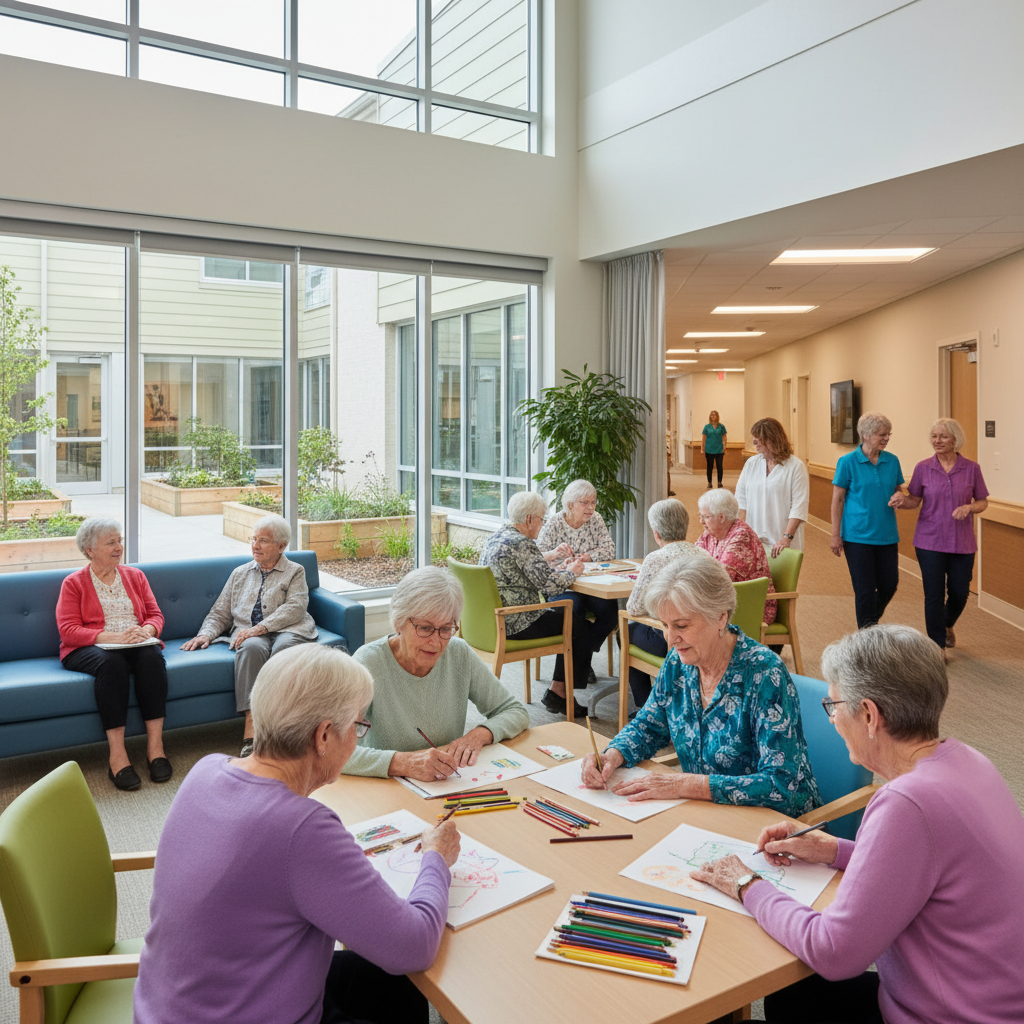
The demand for memory care facilities in the United States is growing at an unprecedented rate. With the Alzheimer's Association reporting that nearly 6.9 million Americans aged 65 and older are living with Alzheimer's disease — a number projected to reach 13.8 million by 2060 — the need for specialized residential environments designed to support individuals with dementia and related cognitive disorders has never been more urgent. Memory care is no longer a niche segment of senior living; it is becoming a central pillar of the industry.
What Memory Care Facilities Provide
Memory care facilities are specialized residential communities designed specifically for individuals with Alzheimer's disease, vascular dementia, Lewy body dementia, and other forms of cognitive impairment. Unlike standard assisted living communities, memory care units offer features tailored to the unique needs of residents with memory loss:
- Secured environments: Locked doors, monitored exits, and enclosed outdoor spaces prevent wandering, one of the most dangerous behaviors associated with dementia.
- Higher staff-to-resident ratios: Memory care typically provides one caregiver for every five to eight residents, compared to one-to-fifteen or higher in standard assisted living.
- Structured daily programming: Activities are designed to provide cognitive stimulation, physical exercise, and social engagement at levels appropriate to each resident's abilities.
- Specialized staff training: Caregivers receive training in dementia communication techniques, behavioral management, and person-centered care approaches.
- Modified physical environments: Design elements such as color-coded hallways, visual cues, reduced noise, and familiar home-like decor help reduce confusion and agitation.
The Numbers Driving Growth
The market for memory care is expanding rapidly. Research from the National Investment Center for Seniors Housing and Care (NIC) shows that memory care occupancy rates have recovered to 88 percent nationally as of late 2025, approaching pre-pandemic levels. New construction of memory care units increased by 22 percent between 2023 and 2025, with the strongest growth in Sun Belt states including Texas, Florida, and Arizona.
Several demographic and medical factors are driving this demand. The Alzheimer's Association's 2026 Facts and Figures report highlights that one in three seniors who dies each year has Alzheimer's or another dementia. Additionally, advances in diagnostics mean that more individuals are being identified earlier in the disease process, increasing the window during which they may benefit from structured care environments.
The financial scale is enormous. Alzheimer's and other dementias cost the American healthcare system an estimated $360 billion annually, with costs projected to exceed $1 trillion by 2050 without significant breakthroughs in prevention or treatment. Medicare and Medicaid cover approximately 64 percent of these costs.
Challenges Facing the Memory Care Sector
Despite growing demand, the memory care sector faces significant headwinds. Staffing remains the primary constraint. Caring for individuals with dementia is physically and emotionally demanding, leading to turnover rates that often exceed 75 percent annually in direct-care positions. The Paraprofessional Healthcare Institute reports that the median hourly wage for memory care aides is $16.50, only marginally above the national median for all home health aides.
Affordability is another major barrier. The average monthly cost of memory care ranges from $5,500 to $8,500 nationally, with costs exceeding $12,000 per month in high-cost metropolitan areas. Medicare does not cover room and board in memory care facilities, and Medicaid coverage varies significantly by state. Many families exhaust savings and rely on Medicaid spend-down provisions to afford care, a process that can be financially devastating.
Quality variation across facilities is a persistent concern. While some memory care communities provide exceptional, evidence-based care, others offer little more than a locked door and minimal programming. The lack of federal standards specifically for memory care — as distinct from general assisted living — means that oversight varies dramatically from state to state.
Innovations in Memory Care Design and Programming
Leading memory care providers are embracing innovative approaches that prioritize quality of life and person-centered care. Some of the most promising trends include:
Small-house and Green House models: Inspired by the culture change movement in long-term care, small-house models feature residences for 10 to 12 individuals with shared kitchens, living rooms, and outdoor spaces. Research published in the Journal of the American Geriatrics Society found that residents in small-house settings experienced fewer behavioral symptoms and required less psychotropic medication compared to those in traditional large-facility settings.
Sensory-based therapies: Multisensory rooms (also known as Snoezelen rooms), music therapy, and aromatherapy programs are becoming standard in progressive memory care facilities. A systematic review in the International Journal of Geriatric Psychiatry found that music-based interventions reduced agitation by 30 percent and improved mood in 67 percent of participants with moderate to severe dementia.
Technology integration: GPS-enabled wearables, AI-powered behavioral monitoring, and interactive digital platforms are enhancing both safety and engagement. Robotic pets and virtual reality experiences designed for individuals with cognitive impairment have shown particular promise in reducing anxiety and promoting positive social interactions.
Outdoor and nature-based programming: Therapeutic gardens, walking paths, and horticultural therapy programs leverage growing evidence that nature exposure reduces agitation and improves sleep quality in individuals with dementia.
How to Choose a Memory Care Facility
For families navigating this decision, experts recommend evaluating several critical factors:
- Visit at different times of day, including evenings and weekends, to observe staffing levels and resident engagement
- Ask about staff training requirements and turnover rates
- Review the daily activity schedule for evidence of meaningful, varied programming
- Inquire about how the facility handles behavioral challenges, including the use of psychotropic medications
- Understand the full cost structure, including any additional fees for increased care needs
- Check state licensing records and any complaint or deficiency history
- Ask about the facility's approach to family involvement and communication
The Alzheimer's Association's Community Resource Finder and the Administration for Community Living's Eldercare Locator are valuable tools for identifying and comparing memory care options in your area.
The Path Forward
The growing demand for memory care facilities reflects both the challenge and the evolving response to one of the most significant health crises facing aging populations worldwide. While obstacles related to staffing, affordability, and quality remain substantial, the innovations emerging in design, programming, and technology offer genuine reasons for optimism. Investing in memory care infrastructure and workforce development today is not optional — it is a demographic imperative that will define the quality of life for millions of families in the years ahead.
Written by
More Posts
We Tried It: Are You Allergic to the Flu Shot? Here's How to Tell
Flu shot allergic reactions affect roughly 1.3 per million doses, yet many seniors skip vaccination out of fear. Here's how to identify a true allergy...
We Tried It: Are You Allergic to the Flu Shot? Here's How to Tell
A true allergic reaction to the flu shot affects fewer than 1.3 per million doses. Learn how to distinguish normal side effects from genuine allergy s...
We Tried It: Are You Allergic to the Flu Shot? Here's How to Tell
A true allergy to the flu shot affects fewer than 1.3 per million doses, yet many older adults skip vaccination out of fear. Here's what the research...
Be the first to comment